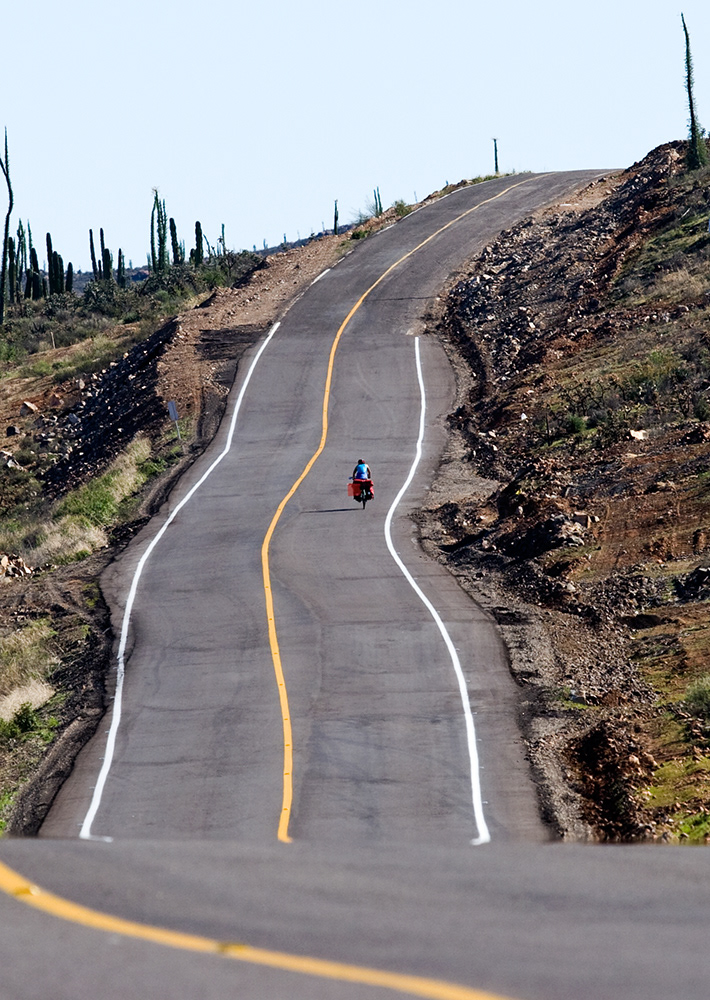
What the Road Weaves comes from a four-and-a-half bicycle journey across the Americas. The journey covered from San Francisco to Patagonia. Instead of treating the trip as an adventure or travel story, the project views the road as a moving place of encounter. Here, bodies, territories, and stories are continually woven together.
The bicycle functions less as transport and more as a slow research tool, allowing close, repeated contact with local and Indigenous communities, landscapes, and infrastructures. Through photographs, field notes, and shared actions, the project gathers a living archive of gestures, domestic spaces, roadside economies, and environmental limits. It attends to the often-unseen labor of sustaining life in places marked by extraction, scarcity, and forced mobility.
The work uses Rosi Braidotti’s idea of nomadic subjectivity. It does not see movement as a spectacle or just as geography. Instead, movement is a position from which identity, materials, and cultural forms resist being fixed. Along the road, relationships, images, and objects are always being reconfigured. What the road "weaves" serves as both method and metaphor for an identity and archive that is always emerging.
As an ethnographic active archive, What the Road Weaves does not aim to document and close a story, but to keep it in circulation. The work holds together themes of environmental awareness, migration, resilience, and everyday forms of care, proposing slowness, attention, and shared making as ways of rethinking how we inhabit territory and how territory inhabits us.